
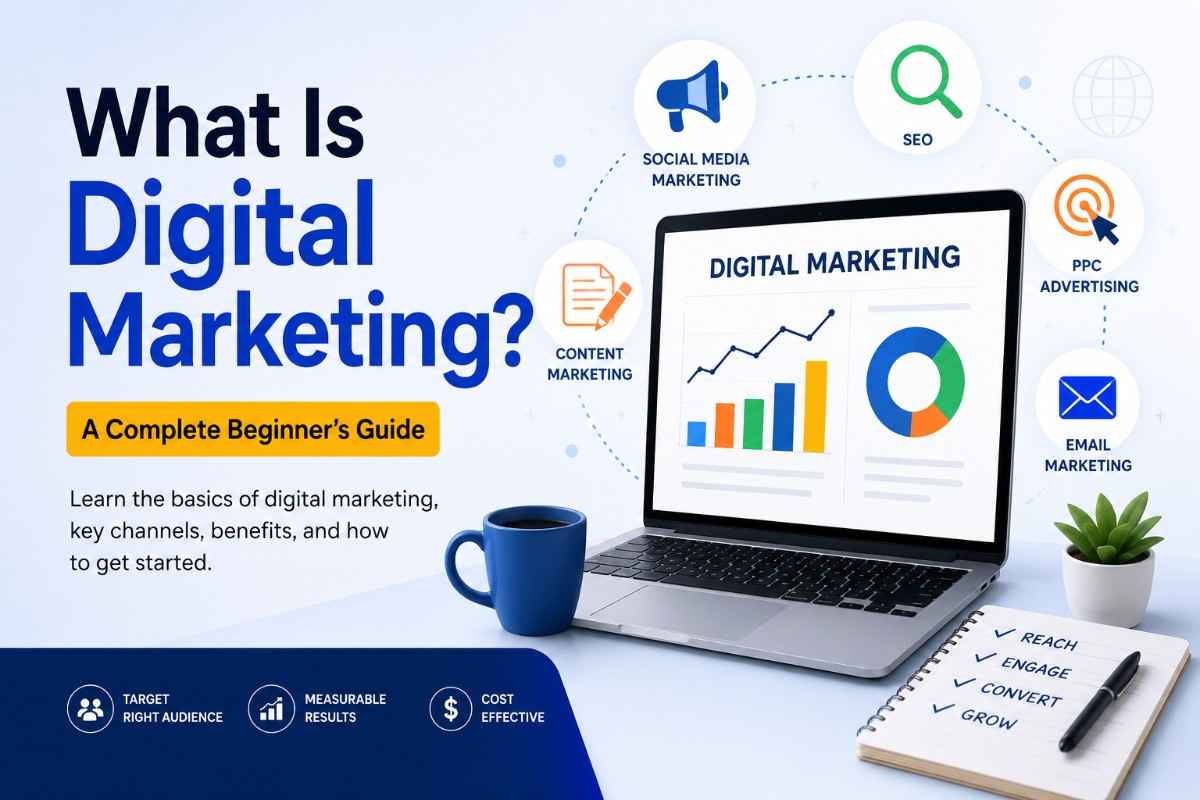
Digital marketing has transformed the way businesses connect with customers. Instead of relying solely on traditional advertising methods like newspapers, television, or radio, businesses can now reach their target audience online through websites, search engines, social media, email, and digital advertisements.
Today, people spend a significant part of their day online—searching for products, watching videos, reading reviews, and interacting with brands. This shift in consumer behavior has made digital marketing one of the most effective ways to attract customers, build relationships, and grow a business.
Whether you’re a small business owner, entrepreneur, student, freelancer, or someone considering a career in marketing, understanding digital marketing is an essential skill. In this beginner’s guide, you’ll learn what digital marketing is, how it works, the different types of digital marketing, and why it’s so important for businesses today.
What Is Digital Marketing?
Digital marketing is the practice of promoting products, services, or brands using digital channels and internet-connected devices. These channels include websites, search engines, social media platforms, email, mobile apps, and online advertising.
Unlike traditional marketing, digital marketing allows businesses to communicate directly with their audience and measure the effectiveness of every campaign. Instead of guessing whether an advertisement is working, businesses can track website visitors, clicks, sales, and customer engagement in real time.
For example, if someone searches Google for “best running shoes” and finds your online store at the top of the search results, that’s digital marketing in action. Similarly, when you see an advertisement on Instagram or receive a promotional email from your favorite brand, you’re experiencing different forms of digital marketing.
The biggest advantage of digital marketing is that it helps businesses reach the right people at the right time while making every marketing effort measurable and easier to improve.
How Does Digital Marketing Work?
Digital marketing follows a simple journey that takes potential customers from discovering your business to becoming loyal buyers.
People Search for Information Online
Most buying journeys begin with a search. Whether someone is looking for a product, comparing services, or reading reviews, they often start by searching on Google, browsing social media, or watching videos on YouTube.
Businesses that have a strong online presence are more likely to be discovered during this stage.
Businesses Create Valuable Content
Once people begin searching, businesses use blogs, videos, social media posts, advertisements, and landing pages to provide useful information and answer customer questions.
Instead of immediately trying to sell a product, successful digital marketing focuses on educating, informing, and solving problems. This helps build trust and encourages visitors to learn more about the business.
Visitors Become Customers
When visitors find valuable information, they are more likely to take action. They might subscribe to a newsletter, request a quote, download a guide, contact the business, or make a purchase.
Every interaction moves potential customers closer to making a buying decision.
Businesses Measure and Improve
One of the greatest strengths of digital marketing is its ability to provide real-time insights. Businesses can track how many people visited their website, which pages they viewed, how long they stayed, and whether they completed a desired action.
Using this data, marketers can improve campaigns, optimize content, and increase their return on investment over time.
Types of Digital Marketing
Digital marketing includes several strategies, each designed to help businesses achieve different goals. Understanding these channels makes it easier to choose the right approach for your business.
1. Search Engine Optimization (SEO)
Search Engine Optimization, commonly known as SEO, is the process of improving a website so that it appears higher in search engine results without paying for advertisements.
When someone searches for information on Google, most users click on one of the first few results. SEO helps your website earn those valuable positions by creating high-quality content, optimizing keywords, improving website speed, and providing a better user experience.
Unlike paid advertising, SEO delivers long-term results. Once your pages rank well, they can continue attracting visitors for months or even years with minimal ongoing costs.
For businesses looking to increase website traffic organically, SEO is one of the most valuable digital marketing strategies.
2. Pay-Per-Click (PPC) Advertising
Pay-Per-Click advertising allows businesses to display advertisements on search engines and other online platforms. Instead of paying for the advertisement itself, businesses only pay when someone clicks on it.
Google Ads is one of the most popular PPC platforms because it allows businesses to appear at the top of search results almost instantly. This makes PPC an excellent option for promoting new products, generating leads, or driving immediate traffic.
Unlike SEO, which takes time to build rankings, PPC can produce results within hours. However, businesses need to manage their advertising budget carefully to maximize returns.
3. Social Media Marketing
Social media marketing focuses on promoting businesses through platforms such as Facebook, Instagram, LinkedIn, X (formerly Twitter), Pinterest, and TikTok.
These platforms allow businesses to share content, engage with followers, answer questions, and build stronger relationships with customers. Instead of using social media only to advertise products, successful brands use it to educate, entertain, and inspire their audience.
Consistently posting valuable content helps businesses increase brand awareness while encouraging customers to interact with their brand on a regular basis.
4. Content Marketing
Content marketing is the strategy of creating valuable and informative content that attracts potential customers naturally.
Rather than directly promoting products, businesses publish blog posts, videos, buying guides, tutorials, case studies, and educational resources that answer customer questions and solve real problems.
High-quality content not only builds trust but also supports other digital marketing strategies like SEO, social media marketing, and email marketing. Over time, useful content helps establish a business as an authority within its industry.
5. Email Marketing
Email marketing remains one of the most effective ways to communicate directly with customers.
Businesses collect email addresses through newsletters, downloadable resources, or special offers and then send personalized messages to subscribers. These emails may include product updates, educational content, promotions, or exclusive discounts.
Because subscribers have already shown interest in the business, email marketing often generates higher engagement and stronger customer loyalty than many other marketing channels.
Why Is Digital Marketing Important?
Digital marketing has become essential because today’s customers spend more time online than ever before. Whether they’re researching products, reading reviews, or comparing prices, businesses need to be visible where their audience is already spending time.
1. Reach the Right Audience
One of the biggest advantages of digital marketing is precise audience targeting. Businesses can show their advertisements or content to specific groups based on factors such as age, interests, location, language, and online behavior.
This targeted approach increases the chances of reaching people who are genuinely interested in the products or services being offered.
2. Measure Every Campaign
Unlike traditional marketing, digital marketing provides detailed insights into campaign performance.
Businesses can monitor website traffic, advertisement clicks, conversion rates, email open rates, and sales. These insights help marketers understand what’s working and identify opportunities for improvement.
Instead of relying on guesswork, every marketing decision can be supported by real data.
3. Market on Any Budget
Digital marketing is often more affordable than traditional advertising. Small businesses can start with a modest budget, test different strategies, and gradually increase their investment as they achieve positive results.
This flexibility allows startups and local businesses to compete with larger companies without requiring massive advertising budgets.
4. Build Strong Customer Relationships
Digital marketing creates opportunities for ongoing communication with customers.
Through social media, email newsletters, blogs, and online communities, businesses can answer questions, gather feedback, and provide valuable information even after a purchase has been made.
Strong relationships lead to increased trust, repeat customers, and long-term business growth.
Digital Marketing vs Traditional Marketing
| Traditional Marketing | Digital Marketing |
|---|---|
| Uses TV, newspapers, radio, and billboards | Uses websites, search engines, social media, email, and online ads |
| Difficult to measure results | Performance can be tracked in real time |
| Targets a broad audience | Targets specific audiences based on data |
| Usually requires a larger budget | Suitable for businesses of all sizes |
| Limited customer interaction | Encourages direct communication and engagement |
Benefits of Digital Marketing
Digital marketing helps businesses reach the right audience, build stronger customer relationships, and achieve measurable results at a lower cost than many traditional marketing methods. Whether you’re a startup or an established business, it provides the tools to increase visibility, generate leads, and drive sustainable growth.
1. Increases Online Visibility
A strong digital marketing strategy helps your business appear where customers are actively searching for products or services. Better visibility means more opportunities to attract potential customers.
2. Delivers Better Return on Investment
Because campaigns can be tracked and optimized continuously, businesses often achieve better results while spending less than they would on traditional advertising methods.
3. Improves Customer Engagement
Digital marketing encourages conversations between businesses and customers. Responding to comments, answering questions, and sharing useful content helps build trust and loyalty.
4. Supports Business Growth
As businesses attract more visitors, generate qualified leads, and improve conversions, digital marketing becomes a powerful driver of sustainable growth.
5. Enables Data-Driven Decisions
Every campaign provides valuable insights that help marketers understand customer behavior. These insights allow businesses to improve their marketing strategies and make smarter decisions over time.
Who Should Learn Digital Marketing?
Digital marketing is valuable for anyone looking to grow a business or build a successful career online.
Small business owners can use digital marketing to attract more local customers and increase sales. Entrepreneurs can launch new products and reach audiences around the world without investing heavily in traditional advertising.
Students and job seekers can develop highly sought-after skills that open doors to careers in SEO, content marketing, paid advertising, social media management, and email marketing. Freelancers and consultants can also use digital marketing to build their personal brand and attract new clients.
Regardless of your industry, digital marketing provides practical skills that can help you succeed in today’s digital economy.
How to Get Started with Digital Marketing
Starting your digital marketing journey doesn’t have to be overwhelming. The best approach is to learn one area at a time while gaining practical experience.
1. Learn the Basics
Begin by understanding how websites, search engines, and customer behavior work. Learning the fundamentals creates a strong foundation for more advanced strategies.
2. Create Helpful Content
Publishing informative blog posts, videos, and social media content helps you practice digital marketing while building an online presence.
3. Build Your Online Presence
Create a website, optimize it for search engines, and stay active on the social media platforms where your audience spends time.
4. Measure and Improve
Use tools like Google Analytics and Google Search Console to understand how people interact with your website. Analyze your results, experiment with different strategies, and continue improving your campaigns.
Frequently Asked Questions
If you’re new to digital marketing, it’s natural to have questions about how it works and where to begin. Below are answers to some of the most common questions to help you better understand the basics and make informed decisions.
1. Is digital marketing suitable for beginners?
Yes. Digital marketing is beginner-friendly, and many of its core concepts can be learned through online resources and hands-on practice.
2. What skills do I need to start digital marketing?
Basic communication, creativity, problem-solving, and a willingness to learn are enough to get started. Technical skills can be developed over time.
3. Is SEO part of digital marketing?
Yes. SEO is one of the most important components of digital marketing because it helps websites attract free, organic traffic from search engines.
4. Can small businesses benefit from digital marketing?
Absolutely. Digital marketing allows small businesses to compete with larger brands by reaching targeted audiences without requiring a huge advertising budget.
5. How long does it take to see results?
The timeline depends on the strategy you choose. Paid advertising can generate results quickly, while SEO and content marketing usually take several months to produce consistent long-term growth.
Final Thoughts
Digital marketing is much more than running online advertisements—it’s about connecting with the right audience, providing value, and building lasting relationships through digital channels. Whether you’re using SEO to improve search rankings, creating engaging social media content, or nurturing customers through email, each strategy plays an important role in growing a business online.
As a beginner, focus on understanding the fundamentals before exploring advanced techniques. With consistent learning and practical experience, you’ll develop the skills needed to create effective digital marketing campaigns that deliver measurable results and support long-term business growth.
Ready to Start Learning Digital Marketing?
Explore our beginner-friendly guides on SEO, content marketing, social media marketing, PPC advertising, and email marketing to build your skills step by step and grow your business with confidence.