
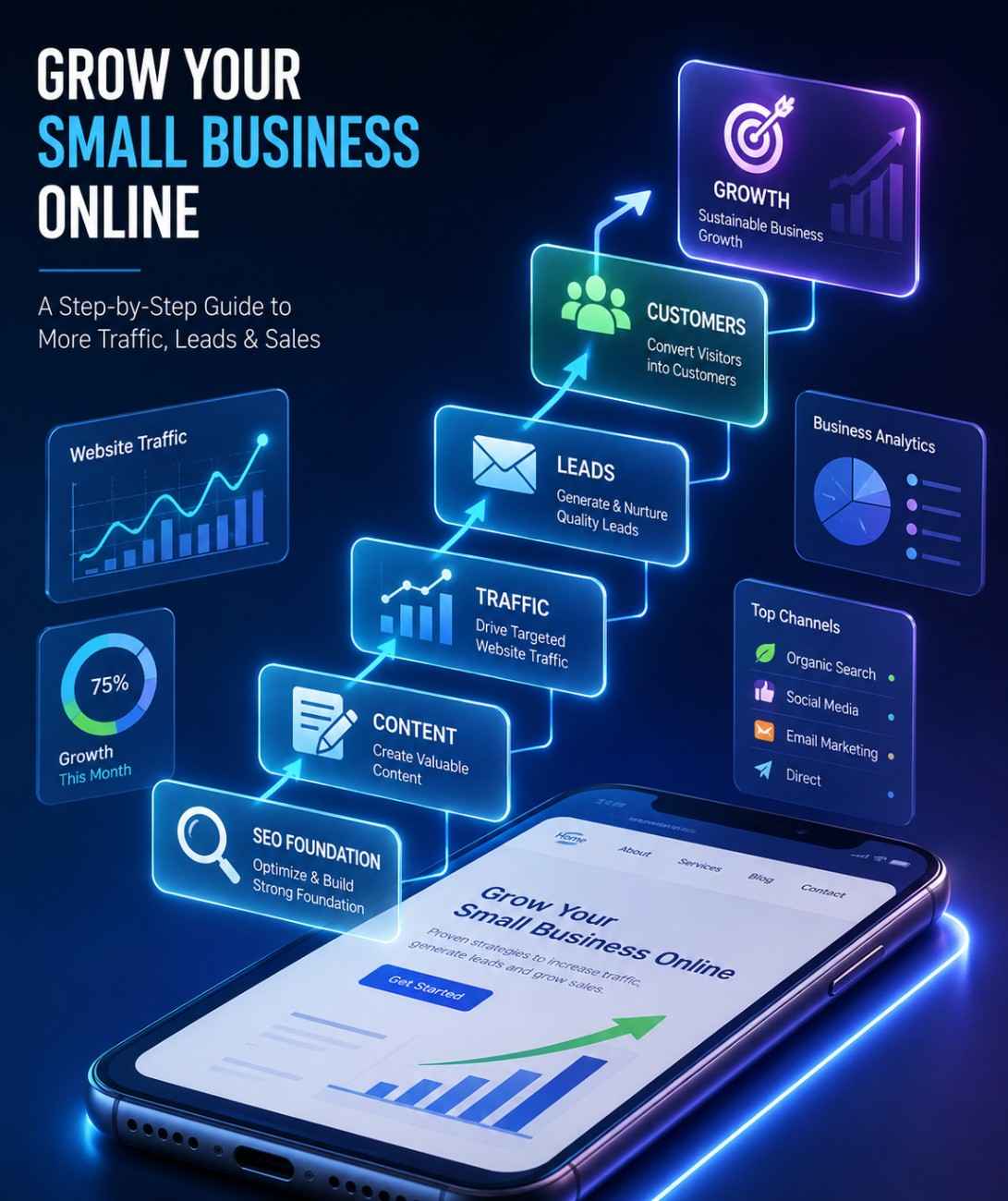
In today’s competitive digital landscape, businesses are constantly searching for ways to attract customers without relying heavily on paid advertising. While paid marketing campaigns can generate quick results, they often stop delivering traffic and leads the moment your budget runs out. That’s why many successful brands focus on strategies that help them grow their business organically online and build sustainable, long-term success.
Organic business growth refers to increasing your website traffic, brand visibility, customer base, and revenue through unpaid methods such as search engine optimization (SEO), content marketing, social media engagement, email marketing, and customer referrals. Unlike paid advertising, organic growth creates valuable digital assets that continue generating results over time.
Businesses that invest in organic marketing strategies often benefit from higher customer trust, lower acquisition costs, improved search engine rankings, and consistent lead generation. Whether you’re a small business owner, startup founder, freelancer, or ecommerce entrepreneur, developing a strong organic online presence can help you compete with larger companies without requiring a massive marketing budget.
In this guide, you’ll discover 15 proven strategies to grow your business organically online, attract qualified leads, increase brand awareness, improve customer retention, and create a sustainable growth system that delivers results for years to come. By implementing these techniques consistently, you can build a powerful online presence that supports long-term business growth and profitability.
What Does It Mean to Grow Your Business Organically Online?
Growing your business organically online means attracting customers, generating leads, and increasing revenue through unpaid digital marketing efforts rather than relying solely on paid advertisements. Organic growth focuses on creating valuable content, improving search engine visibility, building relationships with your audience, and establishing authority within your industry.
When businesses use organic marketing, they invest in long-term strategies such as SEO optimization, content creation, social media marketing, email nurturing, and customer engagement. These methods help businesses earn traffic naturally from search engines, social platforms, referrals, and repeat customers.
Start Growing Your Business Online
Learn a simple step-by-step system to grow your small business online using proven SEO, content marketing, and organic growth strategies.
Grow Small Business Online Step by Step GuideOrganic Growth vs Paid Growth
Organic growth and paid growth both help businesses reach potential customers, but they work in very different ways.
Organic growth focuses on earning visibility naturally through search engine rankings, helpful content, social engagement, customer recommendations, and brand authority. Although it requires time and consistency, the results are often more sustainable and cost-effective over the long term.
Paid growth, on the other hand, relies on advertising platforms such as Google Ads, Facebook Ads, and other pay-per-click (PPC) campaigns. These methods can generate immediate traffic and leads, but results typically stop when advertising budgets are reduced or paused.
The most successful businesses often combine both approaches. However, a strong organic foundation ensures that your business continues attracting customers even when you are not actively spending on ads.
Why Organic Marketing Creates Long-Term Results
Organic marketing creates lasting results because it focuses on building assets that continue working for your business over time. A well-optimized blog post, informative video, or high-ranking webpage can generate traffic and leads months or even years after publication.
Unlike paid campaigns that require ongoing investment, organic marketing compounds over time. Every piece of content, backlink, social share, customer review, and email subscriber contributes to your brand’s digital presence and authority.
As search engines and consumers increasingly prioritize trust and relevance, businesses that consistently provide valuable information are more likely to earn higher rankings, stronger customer relationships, and repeat business. This makes organic marketing one of the most effective strategies for achieving sustainable online business growth.
Benefits of Growing Your Business Organically Online
Businesses that focus on organic growth often experience stronger long-term results than those that depend entirely on paid advertising. By building a sustainable digital presence, companies can attract customers consistently while reducing marketing costs and improving brand credibility.
Lower Customer Acquisition Costs
One of the biggest advantages of organic growth is reducing customer acquisition costs. While creating content and optimizing your website requires time and effort, these investments can continue generating leads long after the initial work is completed.
A well-ranked webpage or blog post can attract thousands of visitors without requiring ongoing advertising expenses. Over time, this significantly lowers the cost of acquiring new customers and improves overall marketing ROI.
Builds Brand Trust and Authority
Consumers are more likely to trust businesses that appear naturally in search results rather than those that rely exclusively on advertisements. Publishing valuable content, sharing industry expertise, and maintaining an active online presence help establish your brand as a trusted authority.
As your reputation grows, potential customers become more confident in your products and services, making it easier to convert visitors into loyal customers.
Creates Consistent Website Traffic
Organic marketing helps generate steady website traffic from multiple sources, including search engines, social media platforms, email campaigns, and referrals. Unlike paid traffic, which disappears when campaigns end, organic traffic can continue growing as your content library expands.
This consistent flow of visitors provides more opportunities to generate leads, sales, and customer engagement.
Generates High-Quality Leads
People who discover your business through search engines, educational content, or recommendations are often actively looking for solutions. As a result, organic traffic typically produces highly qualified leads with stronger purchase intent.
These visitors are more likely to engage with your content, trust your brand, and become long-term customers.
Grow Your Small Business the Right Way
Discover proven strategies to grow your small business online using SEO, content marketing, branding, and customer-focused growth systems.
How to Grow a Small BusinessProduces Long-Term Business Growth
Perhaps the greatest benefit of organic marketing is its ability to support sustainable business growth. Every optimized webpage, customer review, email subscriber, social media follower, and backlink strengthens your online presence.
Over time, these assets work together to increase visibility, improve lead generation, boost customer retention, and create a scalable growth system. Instead of constantly paying for attention, businesses that grow organically build a foundation that continues delivering value and competitive advantages for years to come.
15 Proven Strategies to Grow Your Business Organically Online
Growing a business online without relying heavily on paid advertising requires a strategic and consistent approach. Organic growth doesn’t happen overnight, but the results are often more sustainable and cost-effective in the long run.
Businesses that focus on organic marketing often experience:
- Lower customer acquisition costs
- Higher search engine rankings
- Increased brand awareness
- Consistent website traffic
- Better-quality leads
- Long-term business growth
- Improved customer trust and loyalty
The following proven strategies will help you grow your business organically online and create a sustainable marketing system that delivers results for years.
1. Build an SEO-Friendly Website
Your website is the foundation of your organic marketing strategy. Even the best content and social media campaigns will struggle if visitors encounter a slow, confusing, or poorly optimized website.
Key Elements of an SEO-Friendly Website
| SEO Factor | Why It Matters |
|---|---|
| Site Structure | Helps search engines crawl and index pages efficiently |
| Mobile Responsiveness | Improves user experience on smartphones and tablets |
| Page Speed | Reduces bounce rates and improves rankings |
| User Experience (UX) | Increases engagement and conversions |
| Internal Linking | Helps visitors discover related content |
🚀 SEO-Friendly Website Best Practices
Building an SEO-friendly website helps improve search rankings, enhance user experience, and increase organic traffic. Follow these essential best practices to create a strong foundation for long-term business growth.
Create a Clear Navigation Menu
Make it easy for visitors and search engines to find important pages. A simple navigation structure improves usability and reduces bounce rates.
Organize Content into Categories
Group related pages and blog posts into logical categories to improve website structure and help users discover relevant content.
Use SEO-Friendly URLs
Create short, descriptive URLs that include relevant keywords and clearly indicate the page topic to search engines.
Ensure Mobile Responsiveness
Your website should look and function perfectly across smartphones, tablets, and desktops to improve user experience and rankings.
Optimize Website Speed
Compress images, enable caching, and minimize unnecessary code to improve page loading times and user satisfaction.
Add Clear Calls-to-Action
Guide visitors toward desired actions such as contacting you, subscribing to a newsletter, or making a purchase.
Use SSL Security Certificates
Secure your website with HTTPS encryption to protect user data and improve trust and search engine visibility.
A website optimized for both users and search engines creates a strong foundation for sustainable organic business growth.
2. Create High-Quality Content Consistently
Content marketing is one of the most powerful ways to attract organic traffic and establish authority in your industry. Search engines prioritize websites that consistently publish valuable, relevant, and helpful content.
Types of Content That Drive Organic Growth
| Content Type | Purpose |
| Blog Posts | Target keywords and answer customer questions |
| Ultimate Guides | Build authority and attract backlinks |
| Tutorials | Solve specific user problems |
| Case Studies | Demonstrate expertise and results |
| Industry Insights | Position your brand as a thought leader |
Content Creation Tips for Organic Business Growth
High-quality content is the foundation of successful content marketing and SEO. Follow these proven content creation tips to attract more organic traffic, engage your audience, and improve search engine rankings.
Focus on Solving Audience Problems
Create content that addresses your audience’s challenges, pain points, and questions. Problem-solving content attracts targeted visitors and builds trust.
Answer Frequently Asked Questions
Use customer inquiries and search queries to create valuable FAQ-style content that improves visibility and supports AI search results.
Include Statistics and Examples
Support your content with real data, case studies, examples, and industry insights to increase credibility and authority.
Optimize Content for SEO
Use target keywords, LSI keywords, proper headings, internal links, and meta descriptions to improve search engine visibility.
Update Older Articles Regularly
Refresh outdated content with new information, statistics, and keywords to maintain rankings and increase traffic.
Publish Consistently
A regular publishing schedule helps build topical authority, increase organic reach, and keep your audience engaged.
🚀 Content Marketing Formula
Every successful online business follows a proven content marketing process. Create value first, attract the right audience, build trust, generate leads, and convert them into loyal customers.
Create Valuable Content
Publish blogs, guides, videos, and resources that solve customer problems.
Attract Visitors
Drive targeted traffic through SEO, social media, and content promotion.
Build Trust
Establish authority with helpful, consistent, and informative content.
Generate Leads
Convert visitors into subscribers and prospects using strategic CTAs.
Increase Sales
Turn qualified leads into loyal customers and grow revenue consistently.
The larger your content library becomes, the more opportunities you have to rank for relevant search terms and attract potential customers.
3. Target the Right Keywords
Keyword research helps connect your content with people actively searching for your products, services, or expertise.
Instead of targeting highly competitive keywords, focus on a mix of primary, secondary, and long-tail keywords.
Keyword Strategy Comparison
| Keyword Type | Example | Competition | Conversion Potential |
| Short-Tail | Business Growth | High | Low |
| Medium-Tail | Online Business Growth | Medium | Medium |
| Long-Tail | How to Grow Your Business Organically Online | Lower | High |
🔍 Keyword Research Checklist
Follow these essential keyword research steps to find valuable search opportunities, improve SEO performance, and attract highly targeted organic traffic.
Identify Customer Pain Points
Understand your audience’s challenges and questions to discover keywords that match their needs.
Analyze Competitor Keywords
Research competitor websites to uncover keyword opportunities and content gaps.
Focus on Search Intent
Create content that aligns with what users actually want when searching online.
Use Long-Tail Keywords
Target specific search phrases that often have lower competition and higher conversions.
Include LSI Keywords Naturally
Use related terms and semantic keywords to strengthen topical relevance and SEO.
Examples of LSI Keywords
- Organic marketing strategies
- Online business growth
- Increase website traffic
- Sustainable business growth
- Digital marketing strategies
- Generate organic leads
- Improve search rankings
- Customer acquisition
Targeting the right keywords helps attract visitors who are genuinely interested in your business.
4. Optimize Your Existing Content
Many businesses focus only on publishing new content, but updating existing content can often generate faster SEO results.
Content Optimization Checklist
| Optimization Area | Action |
| Content Updates | Refresh outdated information |
| Keyword Optimization | Add new relevant keywords |
| Internal Links | Connect related articles |
| Readability | Improve formatting and structure |
| SEO Elements | Update title tags and meta descriptions |
Ways to Improve Existing Content
- Add updated statistics.
- Expand thin content sections.
- Include FAQs.
- Improve headings and subheadings.
- Add visuals and infographics.
- Link to newer blog posts.
Updating old content signals freshness to search engines and can significantly improve rankings without creating entirely new articles.
5. Focus on Local SEO
If your business serves a specific location, local SEO can be one of the fastest ways to attract qualified leads.
Local SEO Ranking Factors
| Factor | Importance |
| Google Business Profile | Very High |
| Customer Reviews | Very High |
| Local Keywords | High |
| Local Citations | Medium |
| Website Optimization | High |
Local SEO Best Practices
Local SEO helps your business appear in location-based searches, attract nearby customers, and improve visibility in Google Maps and local search results.
✅ Local SEO Checklist
Claim and optimize your Google Business Profile.
Keep your business information consistent across all directories.
Use city-specific and location-based keywords throughout your website.
Create dedicated local landing pages for target locations.
Encourage customers to leave genuine reviews.
Respond professionally to both positive and negative reviews.
🎯 Example Local Keywords
Strong local SEO can help your business dominate local search results and attract customers who are ready to buy.
6. Build a Strong Social Media Presence
Social media marketing helps increase brand visibility, engage customers, and drive traffic to your website.
Choosing the Right Platform
| Platform | Best For |
| Local businesses and communities | |
| Visual brands and ecommerce | |
| B2B marketing and professional services | |
| Blogging, DIY, ecommerce | |
| YouTube | Educational and video content |
| TikTok | Short-form content and younger audiences |
Social Media Growth Strategy
- Select the right platforms.
- Create a posting schedule.
- Share valuable content.
- Engage with followers.
- Monitor analytics.
- Improve based on performance.
Content Ideas
- Industry tips
- Behind-the-scenes content
- Customer success stories
- Educational videos
- Infographics
- Product demonstrations
Businesses that consistently engage with their audience build stronger relationships and increase brand recognition organically.
7. Use Video Marketing
Video content continues to dominate digital marketing because it is engaging, shareable, and highly effective at building trust.
Benefits of Video Marketing
Video marketing is one of the most effective digital marketing strategies for increasing engagement, building trust, and driving organic business growth. Here’s how video content can help your brand succeed online.
Improves Audience Engagement
Videos capture attention faster than text and images, encouraging users to interact with your content and stay engaged longer.
Increases Website Dwell Time
Visitors tend to spend more time on pages that contain videos, sending positive user experience signals to search engines.
Boosts Social Media Reach
Video content receives higher shares, comments, and engagement across social media platforms compared to most other content formats.
Enhances Brand Awareness
Consistent video content helps businesses increase visibility, strengthen brand recognition, and build stronger audience connections.
Supports SEO Efforts
Optimized videos can improve search visibility, increase click-through rates, and drive additional organic traffic from search engines.
Types of Videos to Create
| Video Type | Goal |
| Product Demonstrations | Showcase products |
| Tutorials | Educate customers |
| Customer Testimonials | Build trust |
| YouTube Videos | Generate organic traffic |
| Short-Form Videos | Increase reach |
🎬 YouTube SEO Success Roadmap
Follow these six essential optimization steps to improve video rankings, increase visibility, and attract more organic views from YouTube search.
Use Target Keywords in Titles
Include primary keywords naturally in your video title to improve search relevance and click-through rates.
Write Optimized Descriptions
Add detailed descriptions with keywords, context, and links to help YouTube understand your content.
Create Engaging Thumbnails
Design eye-catching thumbnails that encourage users to click and watch your videos.
Add Timestamps
Improve user experience by helping viewers navigate directly to important sections.
Use Relevant Tags
Add related tags to provide additional context and improve discoverability.
Include Strong Calls-to-Action
Encourage viewers to subscribe, comment, like, and visit your website.
Video marketing allows businesses to connect with audiences in a more engaging way while supporting overall organic growth efforts.
8. Grow an Email List
Email marketing remains one of the highest ROI digital marketing channels because it gives businesses direct access to their audience.
Popular Lead Magnet Ideas
| Lead Magnet | Example |
| Ebook | Industry Guide |
| Checklist | SEO Checklist |
| Template | Marketing Plan Template |
| Webinar | Free Training Session |
| Discount | First Purchase Offer |
Email Marketing Funnel
Turn website visitors into loyal customers by guiding them through a strategic email marketing funnel designed to build trust, nurture relationships, and increase conversions.
Website Visitor
Attract targeted visitors through SEO, content marketing, and social media.
Lead Magnet
Offer a valuable resource such as an ebook, checklist, or free guide.
Email Subscriber
Convert visitors into subscribers by capturing their email addresses.
Email Nurturing
Build trust through educational content, tips, and personalized emails.
Customer
Convert qualified subscribers into paying customers.
Repeat Customer
Increase customer lifetime value through retention and loyalty strategies.
Newsletter Content Ideas
- Blog updates
- Industry news
- Exclusive tips
- Product launches
- Promotional offers
- Success stories
A well-managed email list helps nurture leads, increase repeat sales, and strengthen customer relationships over time.
9. Encourage User-Generated Content
User-generated content (UGC) is powerful because consumers trust recommendations from real customers more than traditional advertising.
Examples of User-Generated Content
- Customer reviews
- Testimonials
- Product photos
- Social media mentions
- Video reviews
- Success stories
Benefits of UGC
| Benefit | Impact |
| Builds Trust | Higher conversions |
| Improves SEO | Fresh content |
| Increases Engagement | More brand interaction |
| Provides Social Proof | Stronger credibility |
Encourage customers to share experiences and feature their content across your website and social channels.
10. Build Strategic Partnerships
Strategic partnerships allow businesses to reach new audiences without increasing advertising budgets.
Types of Strategic Partnerships
| Partnership Type | Example |
| Referral Partnership | Mutual client referrals |
| Content Collaboration | Joint blog posts |
| Webinar Partnership | Co-hosted events |
| Affiliate Program | Commission-based referrals |
| Cross Promotion | Shared audience campaigns |
Partnership Benefits
- Access new audiences
- Increase brand visibility
- Generate referral traffic
- Build industry authority
- Improve lead generation
Look for businesses that serve the same audience but offer complementary products or services.
11. Guest Post on Relevant Websites
Guest posting remains one of the most effective strategies for building authority, earning backlinks, and expanding brand awareness. Publishing content on reputable industry websites allows you to reach audiences that may not be familiar with your business.
Benefits of Guest Blogging
| Benefit | Result |
| Authority Building | Increased credibility |
| Backlink Generation | Better SEO rankings |
| Brand Exposure | Reach new audiences |
| Referral Traffic | More website visitors |
✍️ Guest Posting Success Framework
Guest posting is one of the most effective ways to build authority, earn quality backlinks, increase brand exposure, and drive referral traffic. Follow this proven process to maximize your results.
🚀 Guest Posting Process
Identify relevant industry websites.
Research their content guidelines.
Pitch unique and valuable article ideas.
Create high-quality content that delivers value.
Include a relevant and professional author bio.
Promote the published article across channels.
⭐ What Makes a Great Guest Post?
Original Insights
Actionable Advice
Industry Expertise
Relevant Statistics
Strong Readability
A consistent guest posting strategy can significantly improve your online authority, search visibility, and organic traffic over time.
12. Improve Customer Experience
One of the fastest ways to grow your business organically online is to improve the overall customer experience. Happy customers are more likely to become repeat buyers, leave positive reviews, refer others to your business, and engage with your brand online. In fact, customer retention is often more cost-effective than acquiring new customers.
Provide Faster Customer Support
Customers expect quick responses when they have questions or concerns. Delayed support can lead to frustration and lost sales.
Ways to improve response times:
- Offer live chat on your website.
- Use chatbots for common questions.
- Respond promptly to emails and social media messages.
- Create a comprehensive FAQ page.
Personalize Customer Communication
Personalization helps customers feel valued and understood. Businesses that tailor communication based on customer behavior often experience higher engagement and conversion rates.
Examples of personalized communication:
- Product recommendations
- Personalized email campaigns
- Birthday or anniversary offers
- Customized onboarding sequences
Focus on Customer Retention
Retaining existing customers can significantly increase profitability and lifetime customer value.
| Retention Strategy | Benefit |
|---|---|
| Loyalty Programs | Encourages repeat purchases |
| Exclusive Discounts | Increases customer satisfaction |
| Follow-Up Emails | Strengthens relationships |
| Customer Feedback Surveys | Improves products and services |
By delivering exceptional customer experiences, businesses can generate positive word-of-mouth marketing, increase customer loyalty, and create sustainable organic growth.
13. Leverage Online Communities
Online communities provide an excellent opportunity to connect with potential customers, build authority, and increase brand visibility without spending money on advertising. Participating in relevant communities allows you to establish trust while positioning yourself as an industry expert.
Join Relevant Facebook Groups
Facebook Groups are valuable for networking, answering questions, and sharing helpful content.
Best practices:
- Provide genuine value before promoting your business.
- Answer questions in detail.
- Participate consistently.
- Share educational content when appropriate.
Use Reddit for Community Engagement
Reddit contains thousands of niche communities where people actively discuss products, services, and industry topics.
Benefits of Reddit marketing:
- Understand audience pain points.
- Discover content ideas.
- Build credibility through helpful responses.
- Increase brand awareness organically.
Answer Questions on Quora
Quora allows businesses to demonstrate expertise by answering industry-related questions.
Quora strategy checklist:
- Answer high-traffic questions
- Provide actionable insights
- Include relevant examples
- Link to helpful resources when appropriate
Participate in Industry Forums
Industry-specific forums often attract highly targeted audiences looking for solutions and recommendations.
| Community Platform | Best For |
| Facebook Groups | Networking and engagement |
| Discussions and audience research | |
| Quora | Authority building |
| Industry Forums | Targeted lead generation |
Consistent participation in online communities can increase website traffic, generate qualified leads, and strengthen your online reputation.
14. Publish Case Studies and Success Stories
Case studies and customer success stories are among the most effective forms of content marketing because they provide real-world proof that your products or services deliver results. They also help potential customers visualize the outcomes they can achieve by working with your business.
Use Social Proof to Influence Buying Decisions
Social proof reduces uncertainty and encourages prospects to trust your brand.
Examples of social proof:
- Customer testimonials
- Product reviews
- User-generated content
- Success stories
- Client results
Build Trust Through Real Results
Consumers trust real customer experiences far more than marketing claims. A well-structured case study demonstrates how your business solved a problem and delivered measurable results, helping potential customers make confident decisions.
The Customer’s Challenge
Identify the specific problem, pain point, or goal the customer was facing before seeking your solution.
The Solution Provided
Explain the strategy, product, or service implemented to address the customer’s challenge.
Implementation Process
Describe the steps taken to execute the solution and achieve the desired outcome.
Measurable Results
Highlight key metrics, performance improvements, or business growth achieved after implementation.
Customer Feedback
Include testimonials, reviews, or direct quotes that validate the success of the solution.
Optimize Case Studies for Conversions
Case studies can serve as powerful conversion tools when strategically placed throughout your website.
| Placement Location | Purpose |
| Landing Pages | Increase conversions |
| Service Pages | Build credibility |
| Blog Posts | Support content marketing |
| Sales Pages | Overcome objections |
Including data, screenshots, metrics, and customer quotes makes your case studies more persuasive and increases their impact on lead generation.
15. Track and Improve Performance Regularly
Growing your business organically online requires ongoing measurement and optimization. Without tracking performance, it becomes difficult to identify what’s working and where improvements are needed.
Monitor Website Traffic with Google Analytics
Google Analytics provides valuable insights into visitor behavior and marketing performance.
Important metrics to track:
- Organic traffic
- User engagement
- Bounce rate
- Session duration
- Top-performing pages
Use Google Search Console for SEO Insights
Google Search Console helps businesses understand how their website performs in search results.
Key SEO metrics:
- Search impressions
- Click-through rate (CTR)
- Keyword rankings
- Indexed pages
- Technical SEO issues
Track Conversion Performance
Traffic alone doesn’t guarantee business growth. You also need to measure conversions and customer actions.
| Conversion Metric | Why It Matters |
| Lead Generation | Measures inquiry growth |
| Email Sign-Ups | Tracks audience growth |
| Sales Conversions | Measures revenue impact |
| Contact Form Submissions | Evaluates lead quality |
Create a Continuous Improvement Process
Follow this simple optimization cycle:
Measure → Analyze → Improve → Test → Repeat
Businesses that regularly review performance data can identify opportunities faster, improve marketing effectiveness, and make smarter growth decisions. Consistent tracking ensures your organic marketing strategy continues to generate traffic, leads, and revenue over time.
Quick Summary: How to Grow Your Business Organically Online
If you want to grow your business organically online, focus on these key areas:
- Improve customer experience and retention.
- Participate in online communities.
- Publish case studies and success stories.
- Track SEO and marketing performance.
- Optimize based on data and customer feedback.
- Continuously build trust and authority.
By combining these strategies with SEO, content marketing, social media, and email marketing, you can create a sustainable growth system that generates long-term results without relying heavily on paid advertising.
Common Mistakes That Prevent Organic Business Growth
Many businesses invest time and effort into digital marketing but fail to see meaningful results because they make avoidable mistakes. If you want to grow your business organically online, it’s important to recognize these challenges and address them before they slow your progress. Avoiding the following mistakes can help improve your search engine rankings, website traffic, lead generation, and overall business growth.
Ignoring SEO
Search engine optimization (SEO) is one of the most important components of organic marketing. Businesses that ignore SEO often struggle to attract organic traffic and compete in search results.
Common SEO mistakes include:
- Not performing keyword research
- Ignoring on-page SEO
- Poor website structure
- Slow page speed
- Missing meta titles and descriptions
Without SEO, even high-quality content may never reach your target audience.
Publishing Inconsistent Content
Content marketing works best when businesses publish valuable content consistently. Posting a few blog articles and then disappearing for months makes it difficult to build authority and maintain search visibility.
Signs of inconsistent content marketing:
- No content calendar
- Irregular publishing schedule
- Outdated blog posts
- Lack of topic clusters
Consistent content creation helps improve organic search rankings and builds trust with your audience over time.
Focusing Only on Sales
Many businesses make the mistake of constantly promoting products instead of providing value. Modern consumers prefer educational content that helps them solve problems before making purchasing decisions.
Instead of focusing only on sales:
- Share helpful tips
- Create how-to guides
- Publish industry insights
- Answer customer questions
Value-driven content attracts more engagement and encourages long-term customer relationships.
Neglecting Customer Retention
Acquiring new customers is important, but retaining existing customers is often more profitable. Businesses that neglect customer retention miss opportunities for repeat sales, referrals, and brand advocacy.
Customer retention strategies include:
- Loyalty programs
- Personalized communication
- Follow-up emails
- Excellent customer support
Happy customers become repeat buyers and help generate word-of-mouth marketing.
Not Tracking Performance Metrics
Without data, it’s impossible to know whether your marketing efforts are producing results.
Track important KPIs such as:
| Metric | Why It Matters |
|---|---|
| Organic Traffic | Measures SEO growth |
| Conversion Rate | Tracks lead generation |
| Bounce Rate | Evaluates user engagement |
| Keyword Rankings | Measures search visibility |
| Customer Retention Rate | Tracks loyalty and repeat business |
Businesses that regularly analyze performance data can make informed decisions and continuously improve their organic marketing strategy.
Organic Growth vs Paid Advertising: Which Is Better?
Many business owners wonder whether they should focus on organic growth or paid advertising. The truth is that both strategies have advantages, but understanding their differences can help you allocate your marketing budget more effectively.
Organic growth focuses on building long-term visibility through SEO, content marketing, email marketing, social media engagement, and customer relationships. Paid advertising generates traffic immediately through platforms such as Google Ads and social media ads.
Organic Growth vs Paid Advertising Comparison
| Factor | 🌱 Organic Growth | 💰 Paid Advertising |
|---|---|---|
| Cost | Lower Long-Term | Ongoing Expense |
| Speed | Slow to Start | Fast Results |
| Sustainability | High | Low |
| Trust | Higher | Moderate |
| ROI Over Time | Strong | Variable |
| Traffic Source | Earned Traffic | Purchased Traffic |
| Lead Quality | Often Higher | Depends on Targeting |
| Long-Term Value | Builds Digital Assets | Stops When Budget Ends |
When to Use Organic Growth vs Paid Advertising
Choosing between organic growth and paid advertising depends on your business goals, timeline, and budget. Here’s a clear breakdown to help you decide the right strategy.
🌱 When Organic Growth Is Better
Organic growth is ideal when you want to build long-term digital assets and sustainable visibility.
- Build long-term authority
- Reduce customer acquisition costs
- Generate sustainable traffic
- Improve search engine rankings
- Establish brand credibility
💰 When Paid Advertising Is Better
Paid ads are effective when you need fast visibility and immediate business results.
- Immediate traffic
- Fast lead generation
- Product launches
- Seasonal promotions
- Quick market testing
The Best Approach: Combine Both Strategies
The most successful businesses combine organic marketing and paid advertising. Paid campaigns can generate short-term traffic while SEO, content marketing, and audience building create long-term growth.
AI Overview Answer:
For most small businesses, organic growth provides better long-term ROI because it creates sustainable traffic, stronger customer trust, and lower acquisition costs. Paid advertising delivers faster results but requires continuous spending to maintain performance.
Simple 90-Day Organic Growth Plan for Small Businesses
If you’re wondering how to grow your business organically online, following a structured 90-day plan can help you build momentum and generate measurable results. The goal is to establish a strong foundation, create valuable content, and continuously optimize your marketing efforts.
Month 1: Build the Foundation
The first month focuses on setting up the essential elements of your online presence.
Key Tasks
- Audit your website
- Improve site speed
- Ensure mobile responsiveness
- Conduct keyword research
- Analyze competitors
- Create a content calendar
Foundation Checklist
✓ Website optimization
✓ Technical SEO improvements
✓ Keyword targeting strategy
✓ Audience research
✓ Content planning
By the end of Month 1, you should have a clear roadmap for your organic marketing strategy.
Month 2: Create and Promote Content
Once the foundation is ready, focus on creating high-quality content and promoting it across multiple channels.
Content Creation Priorities
| Content Type | Goal |
| Blog Posts | Increase organic traffic |
| Guides | Build authority |
| Social Media Posts | Expand reach |
| Email Content | Nurture leads |
Promotion Activities
- Publish SEO-optimized blog posts
- Share content on social media
- Participate in online communities
- Start building an email list
- Engage with your audience
LSI keywords such as content marketing, online business growth, organic lead generation, and brand awareness should be naturally incorporated into your content strategy.
Month 3: Scale and Optimize
The final month focuses on improving performance and expanding your reach.
Growth Activities
- Build quality backlinks
- Guest post on industry websites
- Update existing content
- Analyze traffic data
- Improve conversion rates
Metrics to Review
| KPI | Purpose |
| Organic Traffic | Measure SEO progress |
| Keyword Rankings | Track visibility |
| Email Subscribers | Monitor audience growth |
| Conversion Rate | Measure lead generation |
| Bounce Rate | Evaluate engagement |
Optimization Formula
Traffic Analysis → Content Improvement → Conversion Optimization → Growth
By the end of 90 days, you’ll have:
- A stronger SEO foundation
- Consistent content marketing processes
- Increased website traffic
- Better audience engagement
- Improved lead generation opportunities
90-Day Organic Growth Summary
| Month | Primary Focus |
| Month 1 | Website Optimization & Keyword Research |
| Month 2 | Content Creation & Promotion |
| Month 3 | Backlink Building & Optimization |
Following this simple plan helps small businesses build a sustainable growth system that increases search visibility, generates qualified leads, improves customer engagement, and supports long-term business success without relying heavily on paid advertising.
Frequently Asked Questions
How Long Does It Take to Grow a Business Organically Online?
Most businesses start seeing measurable organic growth within 3 to 6 months, while significant results often take 6 to 12 months. The timeline depends on factors such as SEO implementation, content quality, industry competition, website authority, and marketing consistency. Organic growth is slower initially but delivers sustainable long-term results.
Can a Small Business Grow Without Paid Ads?
Yes, a small business can grow successfully without paid advertising by focusing on SEO, content marketing, local SEO, email marketing, customer referrals, and social media engagement. These organic marketing strategies help attract qualified leads, increase brand visibility, and build customer trust without requiring a large advertising budget.
What Is the Fastest Organic Growth Strategy?
The fastest organic growth strategy is combining SEO-optimized content creation with strategic content promotion. Publishing valuable articles, targeting long-tail keywords, sharing content on social media, and building an email list can accelerate website traffic growth. Consistency and audience-focused content typically produce the quickest organic marketing results.
Is SEO the Best Way to Grow a Business Online?
SEO is one of the most effective ways to grow a business online because it helps attract highly targeted visitors actively searching for solutions. However, the best results come from combining SEO with content marketing, social media marketing, email campaigns, and customer retention strategies to create a complete organic growth system.
How Much Content Should a Business Publish?
Most small businesses should aim to publish one to two high-quality content pieces per week. Consistent publishing helps improve search engine rankings, increase organic traffic, and establish authority. Prioritizing valuable, well-researched content is more important than publishing large amounts of low-quality content.
What Tools Help With Organic Business Growth?
Popular tools for organic business growth include Google Analytics, Google Search Console, Google Keyword Planner, Semrush, Ahrefs, and email marketing platforms. These tools help businesses track website traffic, monitor keyword rankings, analyze customer behavior, improve SEO performance, and optimize overall digital marketing strategies.
Final Thoughts
Learning how to grow your business organically online is one of the most valuable investments you can make for long-term success. Unlike paid advertising, which stops generating results when your budget runs out, organic marketing creates lasting assets that continue driving traffic, leads, and sales over time.
The key to sustainable business growth is consistency. There are no shortcuts that can replace a well-executed strategy built on search engine optimization, content marketing, social media engagement, email marketing, and customer retention. Each of these channels supports the others, creating a powerful ecosystem that helps your business attract, convert, and retain customers.
Remember that organic growth doesn’t happen overnight. The businesses that achieve the best results are the ones that consistently provide value, build trust with their audience, and continuously improve their marketing efforts.
Instead of trying to implement every strategy at once, start with one area that can have the biggest impact on your business. Focus on improving your website, publishing helpful content, optimizing for search engines, or building stronger customer relationships. Once you establish momentum, expand your efforts gradually.
The sooner you begin investing in organic marketing, the sooner you’ll start building a sustainable growth engine that generates traffic, leads, and revenue for years to come.
Start implementing these strategies today and take the first step toward building a stronger, more profitable, and future-proof online business.