
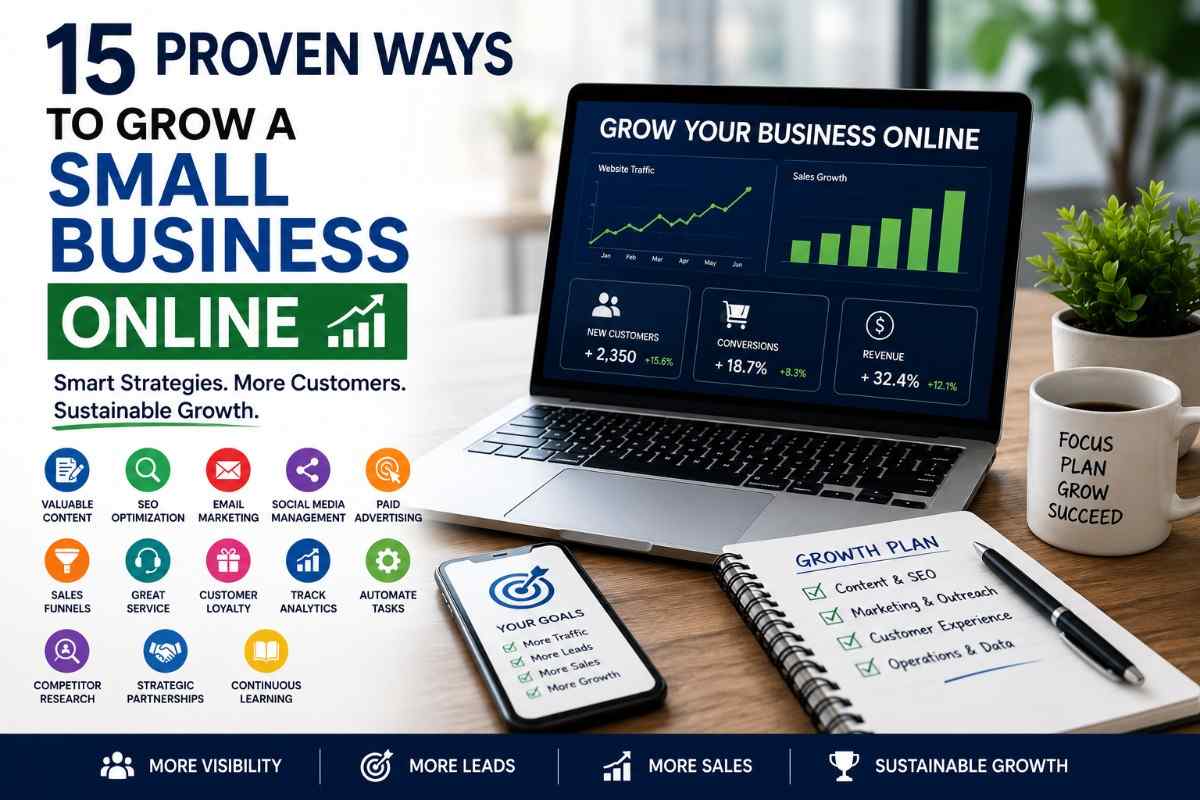
Building a successful online business takes more than simply launching a website or creating social media accounts. Today’s customers expect valuable content, seamless online experiences, personalized communication, and trustworthy brands before they decide to make a purchase.
The good news is that you don’t need a massive marketing budget to grow online. By consistently applying proven digital marketing strategies, improving customer experience, and making data-driven decisions, small businesses can compete with much larger companies.
In this guide, we’ll explore 15 proven ways to grow a small business online, helping you attract more customers, increase sales, and build a sustainable business.
Why Growing Your Business Online Matters
The internet has changed how people discover, research, and buy products or services. Whether customers are searching on Google, browsing social media, or watching YouTube videos, having a strong online presence makes it easier for them to find and trust your business.
Growing online allows you to reach a larger audience, generate leads around the clock, and create long-term relationships with customers—all while measuring your results and improving your strategy over time.
1. Publish Valuable Content
Creating helpful content is one of the most effective ways to attract potential customers. Instead of focusing only on selling, publish blog posts, how-to guides, tutorials, case studies, and answers to common customer questions.
Valuable content builds trust, establishes your expertise, and encourages visitors to return to your website. Over time, it also improves your search engine rankings and generates consistent organic traffic.
2. Invest in Search Engine Optimization (SEO)
Search Engine Optimization (SEO) helps your website appear in Google when people search for products or services related to your business.
By researching the right keywords, optimizing your website, improving page speed, and creating high-quality content, you can attract visitors without paying for every click.
Unlike paid advertising, SEO continues delivering results long after your content has been published, making it one of the most cost-effective long-term growth strategies.
3. Create Long-Form Video Content
Video marketing continues to grow in popularity, especially on platforms like YouTube.
Long-form educational videos help demonstrate your expertise while answering customer questions in greater detail. Since YouTube is also a search engine, your videos can continue attracting viewers for months or even years after they’re published.
Businesses that consistently create useful video content often build stronger trust and reach new audiences organically.
4. Build an Email List
Your email list is one of the few marketing assets you truly own.
Unlike social media platforms, where algorithms control who sees your content, email allows you to communicate directly with your subscribers. Regular newsletters, educational content, exclusive offers, and product updates help keep your audience engaged and encourage repeat business.
Building an email list from the beginning creates a reliable channel for nurturing leads and increasing customer loyalty.
5. Stay Active on Social Media
Social media platforms provide businesses with opportunities to connect directly with their audience, showcase their expertise, and increase brand awareness.
Rather than trying to be everywhere, focus on the platforms where your ideal customers spend their time. Consistently sharing valuable content, responding to comments, and participating in conversations helps build stronger relationships with your audience.
The goal isn’t simply to gain followers—it’s to create an engaged community around your brand.
6. Use Paid Advertising Strategically
Paid advertising can help generate traffic and sales much faster than organic marketing alone.
Start with a small budget and test campaigns on platforms like Google Ads, Facebook Ads, or LinkedIn Ads. Analyze which advertisements produce the best results before increasing your investment.
Testing different audiences, messaging, and creative assets allows you to maximize your return on advertising spend.
7. Build Effective Sales Funnels
Not every website visitor is ready to buy immediately. A well-designed sales funnel guides potential customers through each stage of the buying journey.
Instead of expecting instant purchases, offer valuable resources, encourage newsletter signups, provide product demonstrations, and gradually build trust until visitors are ready to become customers.
An optimized sales funnel helps increase conversions while improving the overall customer experience.
8. Deliver Outstanding Customer Service
Exceptional customer service is one of the most powerful growth strategies available to any small business.
Responding quickly to questions, resolving issues professionally, and exceeding customer expectations encourages repeat purchases and positive recommendations. Happy customers often become your most valuable marketing channel through reviews and word-of-mouth referrals.
Great service builds long-term relationships that are difficult for competitors to replace.
9. Reward Customer Loyalty
Acquiring new customers usually costs more than retaining existing ones. That’s why loyalty programs can significantly improve long-term profitability.
Offering exclusive discounts, reward points, referral bonuses, or early access to new products encourages customers to continue choosing your business over competitors.
Loyal customers also tend to spend more over time while recommending your business to others.
10. Listen to Your Customers
Customer feedback provides valuable insights into what’s working and what needs improvement.
Encourage customers to leave reviews, complete surveys, or share suggestions. Listening carefully to their experiences helps you identify pain points, improve your products or services, and create solutions that better meet customer needs.
Businesses that actively listen often innovate faster than those relying on assumptions.
11. Track Your Analytics
Growing a business requires informed decisions, not guesswork.
Tools like Google Analytics and Google Search Console provide detailed insights into your website traffic, user behavior, conversions, and marketing performance. Monitoring these metrics helps you understand which strategies generate the best results.
Regular analysis allows you to focus your time and budget on activities that contribute to business growth.
12. Automate Repetitive Tasks
As your business grows, manual processes become increasingly difficult to manage.
Automation tools can handle repetitive tasks such as email campaigns, appointment scheduling, lead management, customer follow-ups, and social media publishing. This saves time, reduces errors, and allows you to focus on more strategic activities.
Automation doesn’t replace personal relationships—it simply helps your business operate more efficiently.
13. Research Your Competitors
Successful competitors often provide valuable lessons about what works within your industry.
Study their websites, content, marketing campaigns, pricing strategies, and customer engagement. Rather than copying their approach, identify opportunities to improve upon their strengths and offer unique value to your own audience.
Competitor research helps you stay informed and identify new growth opportunities.
14. Build Strategic Partnerships
Partnering with complementary businesses can expand your reach without significantly increasing your marketing budget.
For example, a web design agency might collaborate with a digital marketing consultant, or a fitness coach could partner with a nutrition expert. These partnerships allow businesses to share audiences, co-create content, and generate mutually beneficial referrals.
Strong partnerships help both businesses grow faster together.
15. Never Stop Learning
The digital world changes constantly. Search engine algorithms evolve, new social media platforms emerge, and customer behavior continues to shift.
Successful business owners stay informed by reading industry blogs, attending webinars, testing new marketing strategies, and learning from their results. Continuous learning helps businesses remain competitive and adapt to changing market conditions.
Growth isn’t a one-time project—it’s an ongoing commitment to improvement.
How to Prioritize Your Growth Strategy
Trying to implement every strategy at once can quickly become overwhelming. Instead, focus on building a strong foundation before expanding into more advanced tactics.
Start by creating valuable content and improving your website’s SEO. Next, build an email list and establish a consistent social media presence. Once you begin attracting regular traffic, invest in paid advertising, automation, and strategic partnerships to accelerate growth.
By improving one area at a time, you’ll create a sustainable system that supports long-term business success.
Benefits of Growing Your Business Online
Growing your business online helps you reach more customers, generate qualified leads, increase sales, and build a stronger brand without relying solely on traditional marketing. It also provides measurable insights that help you continuously improve your marketing efforts and make smarter business decisions.
Frequently Asked Questions
If you’re looking to expand your online presence, you may have questions about which strategies deliver the best results. Below are answers to some of the most common questions small business owners ask when growing online.
What is the fastest way to grow a small business online?
Paid advertising can generate immediate traffic, but combining it with SEO, valuable content, and email marketing creates more sustainable long-term growth.
Is SEO better than paid advertising?
Both strategies have advantages. SEO provides long-term organic traffic, while paid advertising delivers faster results. Using both together often produces the best outcome.
Why is content marketing important?
High-quality content helps answer customer questions, build trust, improve search engine rankings, and attract potential customers without relying solely on advertising.
How often should I post on social media?
Consistency is more important than frequency. Choose a realistic posting schedule and focus on sharing valuable content that engages your audience.
Can small businesses compete with larger companies online?
Yes. Small businesses can compete by focusing on niche audiences, providing exceptional customer service, creating valuable content, and building strong relationships with customers.
Final Thoughts
Growing a small business online doesn’t require huge budgets or complex marketing strategies. It requires consistency, a customer-first mindset, and a willingness to continuously improve. By creating valuable content, optimizing your website for search engines, building meaningful customer relationships, and using data to guide your decisions, you can build a sustainable online presence that supports long-term business growth.
Remember, every successful online business started with small, consistent steps. Focus on implementing one strategy at a time, measure your progress, and continue refining your approach as your business grows.
Ready to Grow Your Business Online?
Explore our expert guides on SEO, digital marketing, content marketing, lead generation, social media marketing, and business strategy to discover practical techniques that will help you attract more customers and grow your small business with confidence.